


Product & Lifecycle
EFS Consulting Expertise in Product & Lifecycle Management
Increasing market demands, growing product complexity, and shorter innovation cycles require holistic management of products across their entire lifecycle. From product strategy and product architecture, through modularization and platform management, all the way to pricing, sales, and aftersales, integrated lifecycle approaches are becoming increasingly critical. The Product & Lifecycle competence at EFS Consulting provides clear direction at the intersection of innovation, efficiency, scalability, and sustainable product performance.
When Companies Turn to Us for Product & Lifecycle Topics
Typical triggers for Product & Lifecycle initiatives include:
- Development of new product generations, platforms, and digital services, including go-to-market, product strategy, and positioning
- Translating and structuring customer, market, and regulatory requirements into scalable product, feature, and system concepts
- Defining product structures, features, variant logic, interfaces, and modular platform systems
- Managing increasing product and system complexity while enabling highly configurable products
- Integrating new technologies and establishing end‑to‑end connectivity of product data, processes, and documentation across the lifecycle (including engineering, industrialization, sales, and aftersales)
- Improving efficiency and optimizing costs along the entire product lifecycle, supported by active portfolio and lifecycle management
Key EFS Consulting Focus Areas within the Product & Lifecycle Competence
Product Planning
Product Planning covers the end‑to‑end management of the product development process – from opportunity analysis and product definition to market launch and continuous evolution. The focus is on cross-functional alignment between strategy, engineering, and operations, as well as the definition of product architectures, specifications, and lifecycle models. This includes structuring features, variants, and modular platform systems to enable scalable and efficient product development.
Keywords: Feature Planning, Platform Strategy, Product Architecture, Product Lifecycle Management, Product Portfolio Management, Product Roadmap, Product Strategy, Variant Management
First Points of Contact: Thomas Verhounig, Stefan Willminger
Related Business Areas:
Target Costing & Cost Down
Target costing and cost-down initiatives focus on systematic cost optimization across the entire product lifecycle, from early product definition to series production and commercialization. The objective is the sustainable reduction of product, material, and process costs while ensuring quality, functionality, and customer value. Key elements include the economic optimization of development programs and transparent cost control across complex product and variant structures.
Keywords: Cost Breakdown Analysis, Cost Engineering, Cost Optimization, Design to Cost, Lifecycle Cost Reduction, Product Cost Management, Should-Cost Analysis, Total Cost of Ownership, Variant Cost Management
First Points of Contact: Georg Groh, Tibor Löderer
Related Business Areas:
Modularization & Platform Management
Modularization, platform management, and variant control enable flexible product architectures and efficient portfolio optimization. The focus is on modular system design, structured variant planning, and feature-based documentation, supported by advanced tools and methods like the VariantPlanner and the MOPS Algorithm. In addition, standardized interfaces and scalable platform and module systems are being developed for highly configurable products. The goal is to manage configurability and define stable baselines within complex product portfolios.
Keywords: Category Management, Configuration Management, Modular Product Architecture, Product Configuration, Product Development, Product Portfolio Optimization, Variant Management
First Points of Contact: Stefan Willminger, Pedro Dias
Related Business Areas:
Digital Engineering & Product Validation
Digital engineering and validation approaches enable efficient testing, simulation, and optimization of complex product architectures throughout the lifecycle. The focus includes virtualization, validation strategies, E/E architectures, Model-Based Systems Engineering (MBSE), and digital twin technologies. Digital threads and PLM platforms establish a consistent data and process foundation, integrating engineering, product, and validation data end‑to‑end.
Keywords: Complexity Management, Configuration Management, Data Modeling, Product Data Integration, Systems Engineering, Validation Engineering, Variant Reduction
First Points of Contact: Bernhard Schreiner, Georg Groh
Related Business Areas:
Product Documentation & Configurability
Product documentation and complexity management create the foundation for consistent and controllable product information across the lifecycle. They enable data-driven product structures while reducing complexity in product and information landscapes (e.g., super BoM, feature based documentation). The focus lies on standardized documentation and data models, supporting consistent product definitions and scalable configurability across product generations.
Keywords: Configuration Management, Documentation Standards, Engineering Changes, Lifecycle Data Management, Variant Management, Variant Modeling
First Points of Contact: Stefan Willminger, Noah Bruns
Related Business Areas:
Circularity & Ecodesign
Eco-design and circularity embed sustainability directly into circular product design and throughout the entire product lifecycle. Key levers include circular product architectures, material strategies, and lifecycle optimization – from design and development through use and recycling – based on LCA, ERP, product responsibility, and R strategies. The focus is also on sustainable product strategies aimed at maintaining product appeal, repairability, and reusability over the entire lifecycle.
Keywords: Circular Design, Circular Products, Cradle-to-Cradle, Environmental Product Declaration (EPD), Product Lifetime, Sustainable Product Lifecycle
First Points of Contact: Günther Kolar-Schandlbauer, Fabian Holly
Related Business Areas:
Product Marketing, Sales & Aftersales
Product marketing, sales, and aftersales manage the commercial lifecycle of products throughout their entire lifecycle—from market launch and positioning to long-term monetization in the aftermarket. The focus is on the product portfolio, pricing strategies, go-to-market models, and the systematic management of demand, customer loyalty, and profitability. This also includes sales strategies, the definition of appropriate distribution channels, pricing logic, and the monetization of products throughout the entire customer lifecycle.
Keywords: Commercial Lifecycle Management, Customer Lifetime Value, Customer Retention, Go-to-Market Strategy, Monetization Strategy, Pricing Strategy, Revenue Management, Value Proposition
First Points of Contact: Thomas Verhounig, Werner Aichholzer
Related Business Areas:
Indirect Spend Management
Indirect spend encompasses all non-product-related procurement expenditures and is a key lever for managing overhead costs and overhead cost structures. The focus is on transparency, structured management, and the sustainable optimization of indirect spend through data-driven analyses and clear decision-making logic. Approaches such as zero-based budgeting, systematic overhead cost accounting, and standardized procurement processes reduce costs and unlock efficiency potential. Particularly in areas such as services, marketing, IT, or retail-related private labels, professional indirect spend management enables clear control, cost transparency, and long-term profitability.
Keywords: Cost Drivers, Cost Structure Analysis, Indirect Spend Management, Overhead Costs, Spend Transparency, Target Costing, Zero-Based Budgeting
First Point of Contact: Michael Strohschneider
Related Business Areas:
Product & Lifecycle | Insights
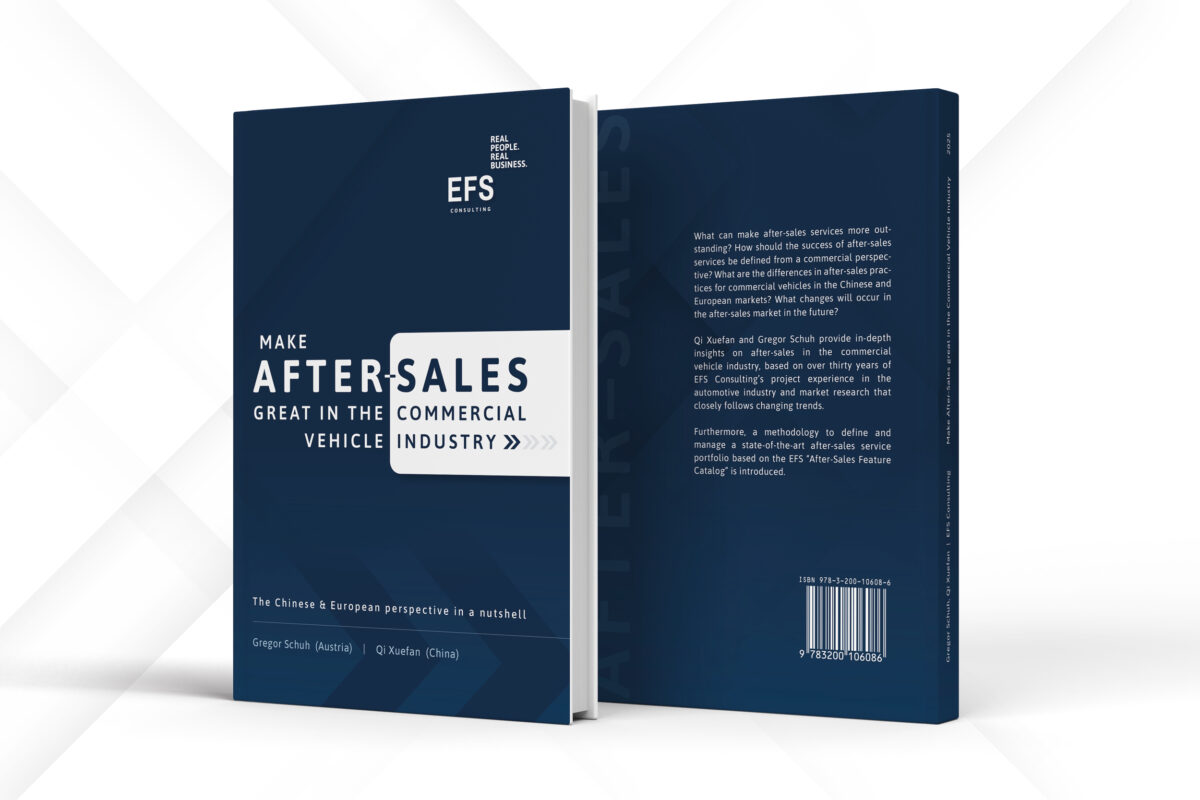



The Product & Lifecycle competency area provides the methodological and substantive foundation for future-proof products—from the initial idea to sustainable value creation throughout the entire lifecycle. Please contact us if increasing product complexity requires integrated, scalable, and economically viable solutions.
Contact EFS Consulting now
Free, personalized initial consultation!